
Short-term rentals can be highly lucrative to dedicated real estate investors. But what if you don’t want to buy an entire property to rent temporarily and inconsistently? Well, you can Airbnb your primary residence. This strategy is popular for those who travel often or just want extra income and don’t mind visitors. If you have yet to hear of it, read along as we go over how to Airbnb your primary residence and the pros and cons of this strategy.
Contents of This Article:
- Can You Airbnbn Your Primary Residence?
- Pros and Cons of Renting Your Primary Residence
- Prepare Your Primary Residence to Become an Airbnb
- How to Determine if Your Airbnb Would Be Profitable
- How to Manage Your Property When You’re Gone
Can You Airbnb Your Primary Residence?
Whether you’re a Washington, DC property manager, rental investor, or a world traveler, you’ve likely heard of Airbnb. Likewise, you’ve probably heard how profitable it can be for those renting their investment properties. But can you Airbnb your primary residence and join in on the profits?
First, you need to check your local laws. Some jurisdictions prohibit short-term rentals, some require licenses, and some have specific rules on how many days you can rent out your property. For instance, in Maryland, you must apply for a short-term residential rental license through the Department of Health and Human Services.
Additionally, you must be paid up on all taxes, follow zoning restrictions, and inform your homeowner’s association about your plan. Then, you’ll need to keep a record of everyone who’s stayed at your property.
In Maryland, a short-term rental is a unit or room in a single-family home or other property that’s available for rent for less day 30 consecutive days. The maximum number of days you can rent your property per calendar year is 120 if you’re absent from the home. However, there’s no limit if you plan on living there while renting it out. Generally, short-term rentals are listed on sites like Airbnb, VRBO, or Booking.com.
Pros and Cons of Renting Your Primary Residence on Airbnb
Using your primary residence as an Airbnb has its pros and cons. Some people wouldn’t even consider letting strangers into their primary residence. However, there are several benefits for those who don’t mind sharing space. So, read along while we review the pros and cons of listing your primary residence as an Airbnb.
Benefits of Renting Your Primary Residence
- Passive Income- You can earn passive income if you Airbnb your primary residence, whether you’re there full-time or gone on vacation.
- More Control and Flexibility- Instead of stressing about having your property booked 24/7, renting your primary residence is less stressful since you live there anyway.
- Meeting New People- If you plan on staying in the property while renting it out to travelers, you can meet new people.
Disadvantages of Renting Your Primary Residence
- Higher Utility Bills- Inviting others into your home will cause your expenses to increase. For instance, you must cover your Airbnb guests’ utilities, cleaning, and other maintenance costs.
- More Property Maintenance- More traffic in your home means more maintenance. For instance, higher traffic in your home means things wear down more quickly, and you’ll need to replace things more often.
- Unpredictable Profits- The income you get from your Airbnb can be irregular and unpredictable. Unlike long-term rentals, you might not have someone to occupy your property on all the available days.
Prepare Your Primary Residence to Become an Airbnb
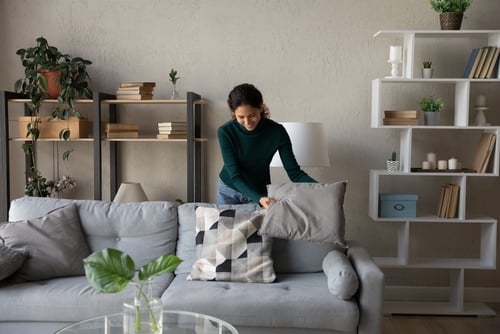
Hosting guests in your primary residence via Airbnb can be costly. Although you’re not buying a separate property to rent out, you must still prepare your home for guests. For instance, you’ll need to prepare your home for high-quality photos. Now, this seems like an easy task, but it’s essential to carefully consider the images you upload. For instance, remove as much clutter as you can. Additionally, consider going for neutral or minimal decor so your guests feel more comfortable and less like strangers in your home.
Before taking photos of the property, you’ll want to deep clean each room. Besides the typical vacuuming, mopping, and dusting, you’ll want to go above and beyond to make your home as clean as possible–almost like a hotel room. It might be easier to hire a cleaning service to do the work for these tasks.
Once you have a clean space and excellent photos of your property, you’ll want to create an excellent description for your Airbnb listing. First, consider taking up-close photos of some interesting or appealing parts of your home to highlight them for potential guests. Then, you can list your property and wait for guests to book your available days.
How to Prepare for Guests
Someone booked a stay at your Airbnb–fantastic! Now, it’s time to prepare for your guests. This step could differ depending on whether you’re at the residence or will be gone. For instance, you’ll want to safely put your personal items away if you aren’t around. You may consider getting a lock box or storing personal items in a room that’s not accessible to guests.
Additionally, you’ll want to prepare for guests by buying waterproof mattress covers, providing a key lock for easy guest access, and putting away personal photos and other belongings. For instance, you don’t want your personal property, like family photos in the living room or clothes in guest closets.
How to Determine if Your Airbnb Would Be Profitable
You don’t want to dive into an investment method if you’re unsure how it’ll work or even be profitable. Instead, you’ll want to research extensively to determine if your primary residence would make a sound, profitable Airbnb. So, read along as we go over some ways to decide whether or not it’s a viable strategy.
- Location- Location is everything for short-term rental properties. If you’re in a desirable location that travelers love to visit, your property will likely get rented more often and quickly. However, if you’re in a more low-key, less visited location, you may have fewer renters than you’d hoped.

- Amenities- Airbnbs with popular amenities tend to do better than those that don’t have desirable features. For instance, proximity to the beach or large cities is a huge attraction for travelers or vacationers.
- Property Type- The type of property you have can also affect profitability. For instance, if you have a large property with more than one room available, you can set higher rates and earn more income. However, if you have a small property or renting just one room, you may set lower rates, resulting in lower profits.
- Season- Depending on the time of year, your Airbnb can be more or less busy. For instance, the most popular months for Airbnbs are between May and September. As such, you’ll likely see higher profits during those months. Luckily, you can set the rates as you see fit, so you can charge more in the summer than you would in the winter.
How to Manage Your Property When You’re Gone
If you Airbnb your primary residence while you go on vacation, you may wonder who will perform maintenance or check on it if anything goes wrong. Or, if you own several rental properties, you may feel overwhelmed performing management tasks at each one. That’s why most investors hire property managers to care for their rentals when they’re not around.
Check out our management services today
Bay Property Management Group offers comprehensive rental management services to landlords near Baltimore, Philadelphia, Northern Virginia, and Washington, DC. If you want to start or build your rental investment portfolio, look to the experts for management help. Contact us today to learn more about how we can help your rental business succeed.
